Did you wake up to sirens today?
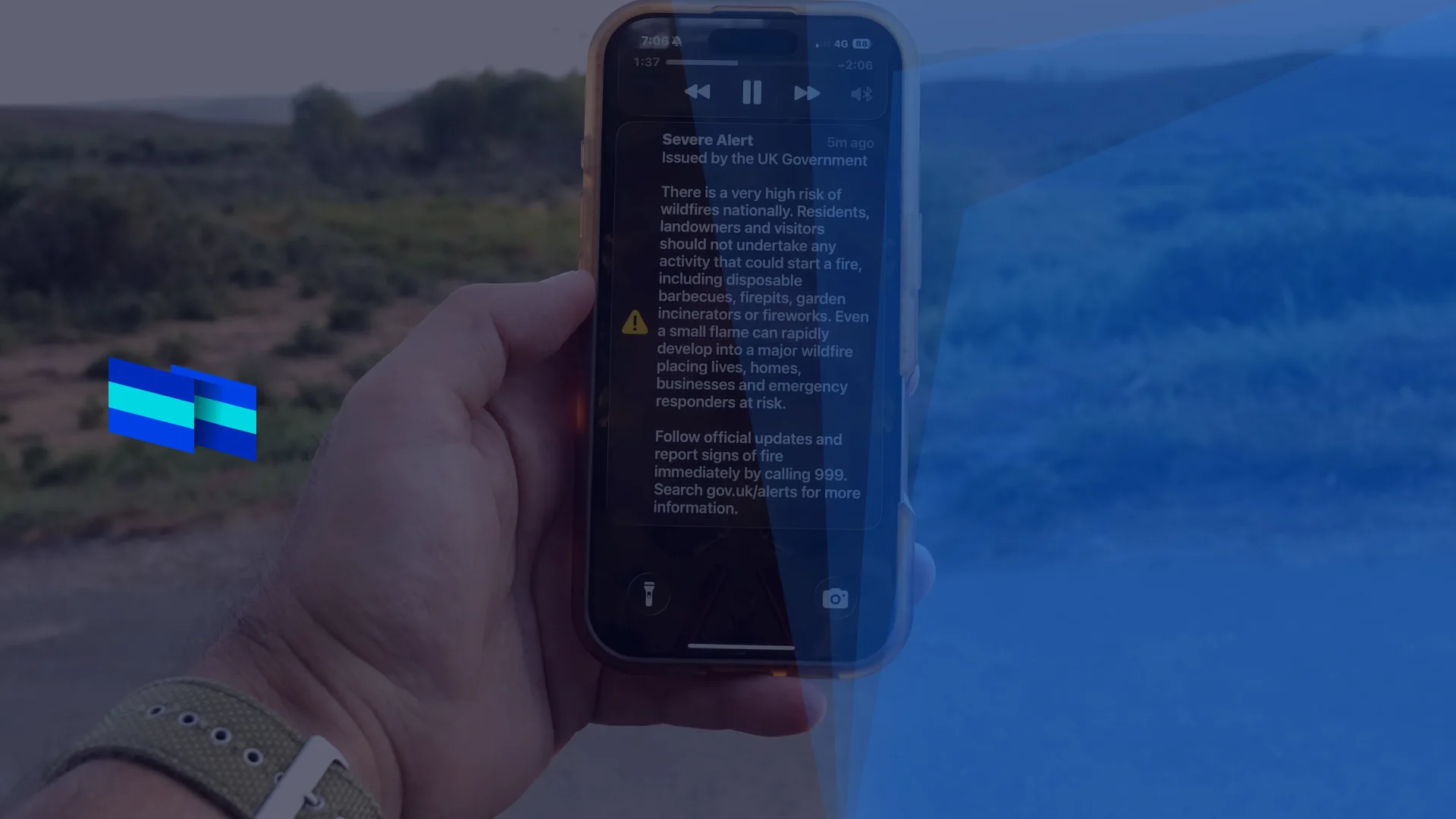
Phones across England and Wales sounded a severe Government Emergency Alert over the wildfire risk — but for many people, the message itself was not the only shock.
The alert warned that the risk of wildfires was “very high” nationally and asked residents, landowners and visitors not to do anything that could start a blaze. Disposable barbecues, firepits, garden incinerators and fireworks were all singled out.
It said even a small flame could rapidly become a major wildfire, threatening homes, businesses, lives and emergency responders.
The warning came as dry and hot conditions have left grassland, woodland and open countryside especially vulnerable. Government advice is clear: do not light fires in parks, moorland or wooded areas; fully extinguish smoking materials; avoid throwing cigarette ends from vehicles; and take glass bottles and other rubbish home.
But online reaction has been sharply divided.
Many people agreed with the safety message but questioned why the loud, intrusive emergency-alert siren was used for a nationwide prevention notice rather than an immediate threat. Some said they feared there was an evacuation, a nearby fire or a more serious national emergency. Others complained of repeated alerts, including separate Welsh- and English-language notifications in Wales.
The backlash has revived a wider concern: if the emergency-alert sound is used too often for advice people see as non-urgent, will they take it seriously when there is an immediate danger to life?
Fire services have defended the need for prevention. Wildfires can spread with alarming speed in dry conditions, and government guidance says most are caused by human activity. Surrey Fire and Rescue Service also urged people not to call 999 over neighbours using barbecues unless there is an actual emergency, after receiving a high volume of calls.
The divide is not really over whether wildfires are dangerous. They are. It is over whether a national alarm designed to cut through every other notification should be reserved for threats unfolding right now.
For officials, the calculation is simple: prevent one spark, prevent a disaster. For critics, the fear is that an alert intended to command attention may instead train people to dismiss it.